
OILTECHPIPE flexible pipes are connected with metal pipes and various details using end fittings. Pipes are supplied with two kinds of end fittings: flange pipe fitting and the welded pipe fitting. Flexible pipes are interconnected by means of symmetric pipe fittings.
Types of fittings
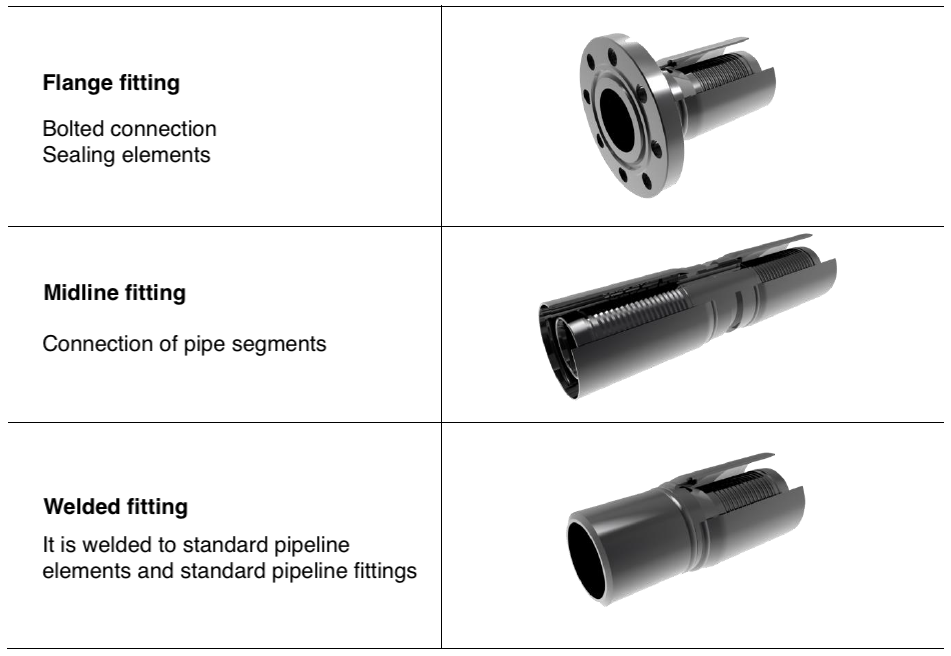
It is possible to produce fittings according to the requirements of the customer. Fittings can be produced according to GOST, ANSI standards.
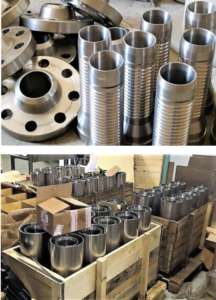
The fitting material is typically chosen based on the compatibility of the pumped liquids and corrosion characteristics of the material. Carbon steel is commonly used in cases where corrosion is not a major concern, for example, for testing flexible pipes of for dry gas transportation. It is recommended to use stainless steel fittings when transporting corrosive liquids.
Equipment for fitting mounting
Hydraulic swaging presses are used for the mechanical installation of steel fittings onto flexible composite pipes. The process is based on controlled hydraulic force to achieve internal expansion and external compression of fittings, ensuring a secure and leak-tight connection.
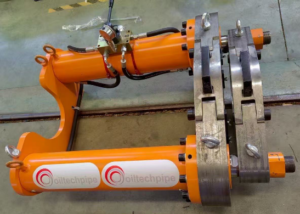
Figure 1 – Hydraulic swaging press “GP-4-300”
Designed for installation of both end fittings
and midline fittings on pipes with
internal diameters from 2” to 8”.
Technical characteristics
Operating pressure: up to 300 bar
Pulling force: up to 150 kN
Dual-cylinder hydraulic system
Manual control with hydraulic distributor
Power supply: 380 V, approx. 4.4 kW
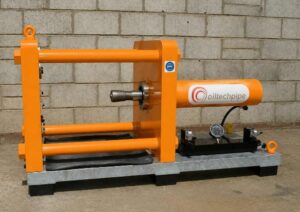
Figure 2 – Hydraulic swaging press “GP-3-250”
Designed for installation of end fittings only,
offering a simpler and more compact solution.
Technical characteristics
Operating pressure: up to 250 bar
Pulling force: up to 150 kN
Single-cylinder design
Lower power consumption (approx. 2.2 kW)